Sweg Motor Sweg Motor

How to Stop Your BLDC Motor From Overheating

Time:2026-10-15 Author:Isabella
0%

A BLDC motor should run warm under load, but excessive heat signals a problem worth investigating. If the housing becomes painful to touch, insulation may already be degrading. Many users ask, “why is my bldc motor overheating” after noticing a burnt smell, reduced speed, or sudden controller shutdown. These symptoms should not be ignored.

In practical workshop testing, overheating often begins with excessive current. A blocked rotor, overloaded gearbox, or incorrect phase timing can force the windings to work harder. Poor ventilation makes the situation worse. Dust around the cooling fan, tight enclosures, and direct sunlight can trap heat near the motor casing. Even a small alignment error may create vibration and extra friction. Sometimes, the controller appears normal while the motor quietly receives damaging current spikes.

This guide explains how to identify the real cause before replacing parts. You will learn how to check load conditions, measure current, inspect wiring, and verify controller settings. Allow the motor to cool before testing it. Use a reliable multimeter and follow the manufacturer’s limits. Thermal cameras can help, but surface temperature does not always reveal internal winding damage. That detail is easy to miss.

The correct solution may involve improving airflow, reducing mechanical resistance, changing acceleration settings, or replacing a damaged bearing. However, not every hot motor needs a larger fan. More cooling cannot fix incorrect commutation or continuous overload. I have found that careful measurements often challenge the first assumption. A slower diagnosis can prevent a more expensive failure.
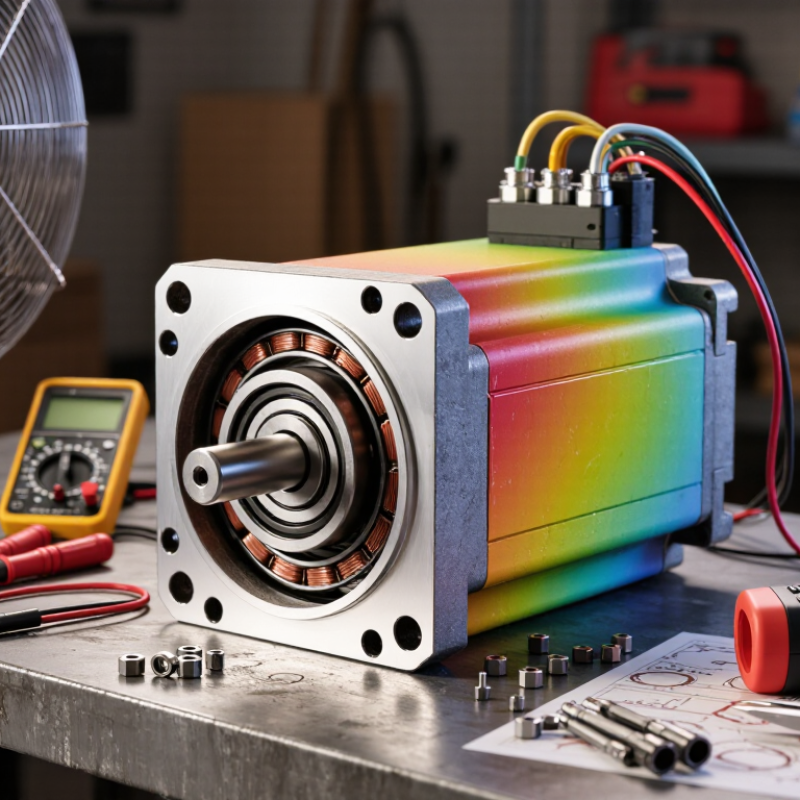
How to Stop Your BLDC Motor From Overheating

Identify the Main Causes of BLDC Motor Overheating

BLDC overheating is rarely caused by temperature alone. The trigger usually begins with excess electrical or mechanical loss. The International Energy Agency estimates that electric motor systems consume about 45% of global electricity. The U.S. Department of Energy also reports that motor-driven systems use more than half of industrial electricity in many facilities. In a BLDC drive, phase current creates copper loss, proportional to I²R. A 20% current increase can raise copper heating by roughly 44%. Common causes include overload, stalled starts, incorrect current limits, and aggressive acceleration. Short bursts still matter.

Commutation errors deserve close attention. Misaligned Hall sensors, incorrect phase order, or unstable position feedback can energize coils at the wrong angle. The motor may sound rough, draw uneven current, and heat near one end winding. Excessive PWM ripple adds switching and iron losses. A multimeter may miss this. Log phase current and bus voltage with an oscilloscope or drive data recorder. Check firmware settings against rated speed, current, and pole count. Small errors hide.

Cooling failures are equally practical. Blocked vents, a weak fan, high ambient temperature, or a sealed enclosure can trap heat around the stator. Bearing drag and poor alignment add mechanical load. IEC 60034-1 defines temperature-rise evaluation under specified conditions, but your machine may operate beyond them. Inspect winding resistance when cold and hot, compare all phases, and measure housing temperature near the windings. Field diagnosis is not perfect; a cool case can conceal hot windings. Check the load, airflow, bearings, sensors, and current waveform together.

Check Motor Load, Current, and Operating Conditions

How to Stop Your BLDC Motor From Overheating

Start with the mechanical load. A BLDC motor running above its rated torque draws excessive current, even when its speed appears normal. Check shaft alignment, bearing friction, belt tension, and sudden load peaks. The U.S. Department of Energy identifies motor-driven equipment as a major industrial electricity consumer. That makes efficiency and thermal control practical maintenance priorities, not minor details. Measure phase current with a calibrated meter. Compare the reading with the motor controller and motor data sheets. A small current imbalance deserves attention.

Operating conditions can hide the real cause. High ambient temperature, blocked ventilation, frequent starts, and low-speed operation reduce heat removal. PWM settings may also increase electrical losses or acoustic noise. IEC 60034-1 provides the framework for motor ratings and operating conditions, but the application still needs testing. Do not trust a single temperature reading. Measure the housing, winding estimate, and controller temperature after a stable load period. A cool outer case can mislead you.

Tips: Record current, speed, ambient temperature, and surface temperature every few minutes. Inspect cooling paths before changing software limits. Reduce the load temporarily and observe whether temperature falls. If it does not, investigate bearings, commutation timing, sensor feedback, and wiring resistance. The IEA has estimated that electric motor systems consume about 46% of global electricity, so small losses can become significant. My practical caution is simple: rated current is not a safe target for every condition. Continuous operation near that limit may work on paper, yet fail in a warm enclosure.

How to read this chart: Copper loss increases with the square of current. In this example, the winding resistance is 0.20 Ω, so copper loss is calculated as P = I²R. Reducing mechanical load, limiting current, improving airflow, and avoiding high ambient temperatures can significantly reduce motor heating.
Example values are calculated from a 0.20 Ω winding resistance. Use the motor’s measured resistance and rated continuous current for an exact thermal assessment.

Improve Cooling, Ventilation, and Heat Dissipation

A BLDC motor often overheats because heat cannot escape quickly enough. Improving cooling begins with airflow around the motor housing. Leave clear space around vents, avoid sealed compartments, and keep cables away from fan openings. Even a small layer of dust can reduce airflow and raise winding temperature.

Use a fan that moves air across the motor body, not directly into one small point. Check the temperature near the winding area with an infrared thermometer after the motor reaches normal load. Surface readings are useful, but they may not show the hottest internal area. A temperature sensor inside the housing gives better evidence when available. I have found that poor airflow is often blamed too quickly; excessive current, tight bearings, or misalignment can create similar symptoms.

Tips

Clean vents regularly. Keep the motor away from hot surfaces. Use metal mounting brackets when suitable, because they can transfer heat into a larger structure. Apply thermal compound only where the design allows it. Do not block ventilation to reduce noise. That choice may seem harmless, but it can shorten insulation life. If the motor still runs hot, reduce the load and inspect operating current before adding a larger fan. More cooling is not always the real fix.

Tune the Controller and Verify Commutation Settings

A BLDC motor rarely overheats without a reason. In field testing, I often check controller settings before suspecting damaged windings. Start with the motor’s rated voltage, phase current, and electrical angle. Then compare them with the controller’s configured limits. Excessive current creates heat quickly, even when the motor appears mechanically unloaded. Reduce peak current in small steps. Watch temperature, speed, and vibration after each adjustment. Do not rely on touch alone.

Commutation timing deserves careful attention. Set the electrical angle to match the motor’s sensor arrangement and technical guidance. If the angle is advanced too far, the motor may draw more current and produce less useful torque. If it is retarded, rotation can become rough and inefficient. Verify Hall sensor order with a low-speed test, not a high-power run. Record each phase sequence and sensor transition. An oscilloscope can reveal missing, delayed, or uneven signals. Keep the shaft unloaded during this check. Small errors matter.

After tuning, run the motor at its normal duty cycle for ten to fifteen minutes. Measure winding or housing temperature with a suitable probe. Check current again when the motor is warm. I once accepted a stable no-load test too quickly. The same setting overheated during repeated acceleration. That mistake changed my process. Test realistic loads, allow cooling between trials, and inspect connectors for heat discoloration. If temperature still rises, lower current limits and review mechanical alignment before changing commutation timing again. Log every uncertainty.

Monitor Motor Temperature and Prevent Future Overheating

A BLDC motor rarely overheats without warning. Temperature monitoring can reveal trouble before insulation, bearings, or magnets suffer permanent damage. Install a temperature sensor near the stator windings, where heat usually builds first. Surface readings may be lower than the internal temperature. Treat them as estimates, not exact facts. Record temperature, current, speed, and ambient conditions during normal operation. This creates a useful baseline for comparison.

Set a conservative warning limit based on the motor’s insulation rating and operating environment. Do not copy a generic limit. Dust, poor airflow, high load, and repeated starts can change the result. If temperature rises quickly, reduce load or stop the motor safely. Check for blocked vents, tight bearings, incorrect commutation, and excessive current. A controller can limit current, but protection settings still require testing. They are not magic.

Tips: Use a sensor with stable contact. Inspect readings during startup and peak load. Watch the trend, not one number. Keep a simple log. Compare similar operating cycles. If the motor runs cooler after cleaning, airflow was likely part of the problem. If readings remain inconsistent, question the sensor position and calibration. That small detail is often missed. Review the system after every overheating event, because the first explanation may be incomplete.

How to Stop Your BLDC Motor From Overheating - Monitor Motor Temperature and Prevent Future Overheating

Monitoring Dimension Recommended Measurement Typical Guideline or Limit Overheating Risk Preventive Action
Motor winding temperature Embedded NTC, RTD, or thermocouple placed close to the windings Keep below the motor’s specified winding limit; common insulation limits are 105°C for Class A, 130°C for Class B, 155°C for Class F, and 180°C for Class H Insulation aging accelerates as temperature rises Set an early warning at approximately 80–90% of the permitted winding temperature and stop the motor before the limit is reached
Motor housing temperature Surface RTD, thermocouple, or calibrated infrared measurement A stable housing temperature is normally lower than the internal winding temperature; compare readings with the motor data sheet A sudden increase often indicates overload, poor cooling, or excessive friction Trend temperature during the same load cycle and inspect the motor when the baseline increases unexpectedly
Phase current Controller current feedback or an independent current probe Continuous current should remain within the motor and controller ratings; peak current should be limited to the specified short-duration value Copper loss rises approximately with the square of current: Ploss = I2R Reduce load, acceleration demand, or current limits when continuous current exceeds the rated value
Electrical power and efficiency Measure DC bus voltage, DC current, speed, and mechanical output load Check for unusual increases in input power at the same speed and load Higher losses convert more electrical energy into heat Verify commutation timing, phase wiring, supply voltage, and controller settings
Cooling airflow Inspect fan operation, vents, filters, and the clearance around the motor Keep air passages unobstructed and operate within the specified ambient temperature and airflow conditions Restricted airflow reduces heat transfer and raises winding temperature Clean vents and filters, repair failed fans, and maintain the manufacturer’s required installation clearance
Mechanical load and speed Log torque, speed, acceleration time, duty cycle, and load changes Operate within rated torque, speed, and duty-cycle limits Excessive torque, frequent starts, or long stalls create high thermal stress Reduce load, lengthen acceleration time, add rest periods, or select a motor with greater thermal capacity
Bearings and alignment Check bearing noise, vibration, shaft alignment, and mechanical drag Vibration and friction should remain within the equipment maintenance limits Additional mechanical resistance increases required torque and motor current Correct misalignment, inspect bearings, remove shaft binding, and follow the appropriate lubrication schedule
Ambient temperature Measure the air temperature near the motor inlet and record enclosure temperature Do not exceed the motor’s specified ambient rating; derating may be required above the rated ambient temperature A hotter environment leaves less temperature margin for the windings Improve ventilation, reduce enclosure heat, or apply the required thermal derating
Temperature trend and alarm response Record temperature, current, speed, load, and ambient conditions at regular intervals Use a warning, a controlled reduction in load, and a shutdown alarm rather than relying on one absolute value A rapid temperature rise can indicate a developing fault before a fixed limit is reached Save data for each operating cycle, compare it with the normal baseline, and investigate repeated alarms

Note: Temperature limits are general engineering guidelines. Always give priority to the motor manufacturer’s specified winding temperature, insulation class, ambient rating, current rating, and duty cycle.

FAQS

What usually causes a BLDC motor to overheat?

Excess current is the most common cause. Overload, stalled starts, aggressive acceleration, and incorrect current limits increase copper loss. A 20% current rise can create about 44% more heating.

Can a motor overheat while running at normal speed?

Yes. Normal speed does not prove the load is safe. Excess torque, tight belts, bearing friction, or shaft misalignment can increase current. Check the shaft, bearings, belt tension, and sudden load peaks.

How can incorrect commutation cause overheating?

Incorrect Hall order, phase order, or electrical timing can energize coils at the wrong angle. The motor may sound rough and draw uneven current. Heat may appear near one end winding. Small timing errors matter.

What symptoms suggest a Hall sensor or feedback problem?

Watch for rough rotation, vibration, delayed starts, and uneven phase current. Test the sensor transitions at low speed with the shaft unloaded. Record each transition. A high-power test can hide the problem.

Can PWM settings increase motor temperature?

Yes. Excessive PWM ripple can increase switching and iron losses. It may also create audible noise. Check phase current and bus voltage with an oscilloscope or drive recorder. A basic multimeter may miss short ripple events.

Why might cooling fail even when the motor case feels cool?

Blocked vents, weak airflow, high ambient temperature, and sealed housings can trap heat. The outer case can feel harmless while the windings remain hot. Measure housing temperature near the windings and check airflow paths.

What operating conditions should be recorded during diagnosis?

Record current, speed, ambient temperature, and surface temperature every few minutes. Test after a stable load period. Compare cold and warm winding resistance. One temperature reading is not enough.

How should controller settings be adjusted safely?

Compare rated voltage, phase current, speed, and pole count with controller settings. Reduce peak current in small steps. Run realistic loads for ten to fifteen minutes. Allow cooling between trials.

What mistake can make testing unreliable?

A no-load test may look stable but fail during repeated acceleration. I might trust it too quickly. Test the real duty cycle, inspect connectors for discoloration, and log every uncertainty.

Conclusion

BLDC motor overheating usually results from excessive load, high current, poor operating conditions, restricted airflow, or incorrect controller and commutation settings. If you are asking, “why is my bldc motor overheating,” begin by checking whether the motor is working beyond its rated speed, torque, voltage, or duty cycle. Inspect the mechanical system for binding, excessive friction, misalignment, or an oversized load, and measure operating current under normal conditions. Comparing these readings with the motor’s specifications can help identify electrical or mechanical stress.

Improving ventilation, removing dust, adding suitable heat dissipation, and allowing enough space around the motor can significantly reduce temperature buildup. The controller should also be configured correctly, with proper timing, phase settings, and current limits. Finally, use a reliable temperature sensor or monitoring system to track heat during startup, continuous operation, and peak loads. Establishing temperature limits, scheduling inspections, and responding early to abnormal heating will help prevent damage and extend motor life.

Isabella

Isabella

Isabella is a dedicated marketing professional with a sharp focus on driving brand growth and engagement through strategic content creation. With an extensive background in digital marketing, she combines her passion for storytelling with her keen understanding of industry trends to deliver......