Sweg Motor
Synchronous motors are critical in various industrial applications due to their ability to maintain a constant speed under load. Understanding how do synchronous motors maintain constant speed under load is essential for ensuring operational efficiency. These motors operate using a magnetic field generated by alternating current. Unlike induction motors, synchronous motors lock into the frequency of the power supply.
When a load is applied, synchronous motors adjust by maintaining firm synchronization with the supply frequency. This unique feature is pivotal in heavy-duty applications. The rotor's magnetic field interacts with the stator's field to keep speed steady. However, challenges such as rotor inertia and load variations must be managed effectively.
Achieving stable performance requires precise control systems. Even slight discrepancies can trigger instability. The effectiveness of these systems can vary based on the motor design and application. Users must remain vigilant about maintenance, as wear can affect performance. This complexity invites further exploration into advancements in technology and design for better reliability in synchronous motors.
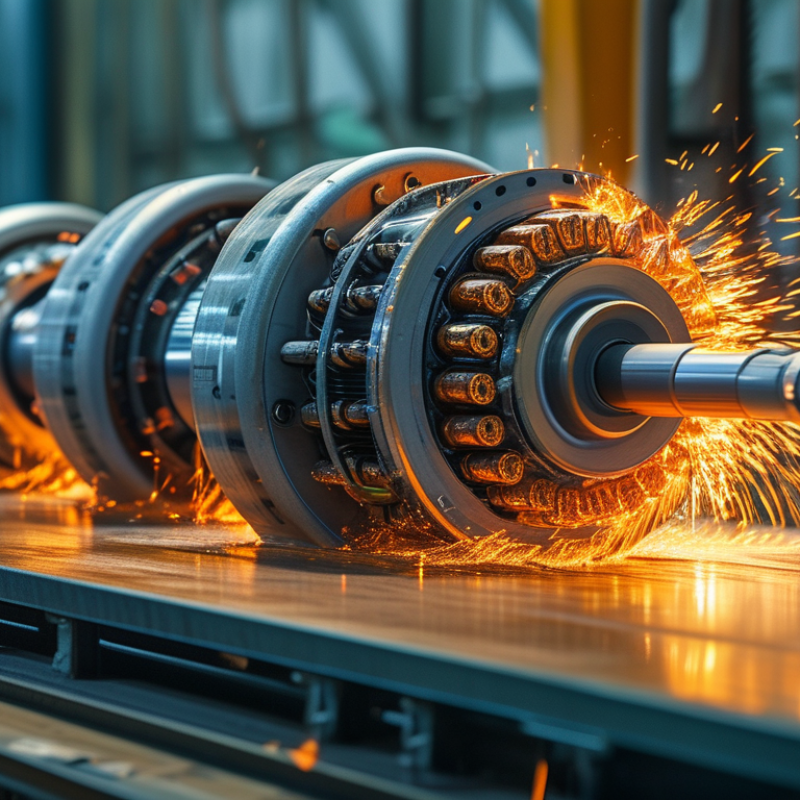
Synchronous motors are unique in their ability to maintain a constant speed under varying load conditions. This feature primarily stems from their operating principles. Unlike asynchronous motors, synchronous motors rely on a magnetic field produced by direct current (DC) in the rotor. This interaction allows the rotor to lock in with the rotating magnetic field of the stator. As a result, synchronous motors can achieve a constant speed that is directly proportional to the supply frequency.
According to the Electric Power Research Institute (EPRI), the efficiency of synchronous motors can reach up to 95%, making them a favorable choice for many industrial applications. However, challenges do exist. For example, if the load exceeds the rated capacity too significantly, these motors may lose synchronism. This phenomenon can lead to potential shutdowns and require careful monitoring of operational parameters. Understanding the limits of synchronous motors is essential. While they are highly efficient, operators must be cautious to avoid overloading.
In practical applications, factors like load variations, voltage fluctuations, and control systems impact motor performance. Continual adjustments and monitoring are necessary to ensure optimal functionality. Embracing advanced control strategies can help mitigate some of these challenges, offering a pathway to enhanced reliability. Reflecting on the operational nuances of synchronous motors can lead to better design choices and implementation strategies.
This chart illustrates the performance of synchronous motors as they operate under various load conditions. The data shows how the motor speed slightly decreases as the load increases, demonstrating the ability of synchronous motors to maintain constant speed while managing different levels of load.
Synchronous motors are unique because they maintain constant speed regardless of the load. This capability stems from their precise synchronization with the supply frequency. According to recent industry reports, synchronous motors can achieve efficiency levels above 95%, making them a preferred choice in various applications.
The synchronization process is critical. It allows the rotor to lock into the magnetic field created by the stator’s alternating current. The motor rotates at a speed determined by the frequency of the electrical supply. This unique mechanism prevents speed fluctuations even when load variations occur. In contrast, induction motors may experience speed changes under load due to slippage. This difference highlights the importance of synchronization in operating efficiency.
Data indicates that industries relying on continuous operations, such as manufacturing and power generation, benefit greatly from synchronous motors. They provide not only reliable speed but also improved power factor correction. However, the initial investment costs can be higher. Yet, their long-term operational savings often outweigh these initial costs. Balancing efficiency and cost remains a key consideration for businesses.
| Parameter | Value | Units | Description |
|---|---|---|---|
| Rated Speed | 1500 | RPM | Standard motor operating speed |
| Load Torque | 10 | Nm | Torque applied during operation |
| Input Voltage | 400 | V | Voltage supplied to the motor |
| Frequency | 50 | Hz | Frequency of the AC supply |
| Power Factor | 0.85 | — | Measure of energy efficiency |
| Efficiency | 90 | % | Ratio of output power to input power |
| Field Current | 2 | A | Current flowing through the field windings |
Synchronous motors are known for their ability to maintain a constant speed under load. This characteristic arises from their unique construction and operational principles. As load conditions change, synchronous motors adjust their current without altering the rotational speed. This capability is essential in various applications, from industrial drives to power plants.
The key to a synchronous motor’s performance lies in its rotor and stator design. The rotor is typically equipped with permanent magnets or wound coils. These create a magnetic field that synchronizes with the stator's rotating magnetic field. When a load is applied, the motor’s control system adjusts the excitation to match the new conditions. This mechanism helps the motor sustain its speed, even when faced with significant load variations.
Despite their advantages, synchronous motors are not without challenges. They require precise control systems to manage the load effectively. If the load exceeds certain limits or the excitation fails, the motor may lose synchronism, leading to erratic behavior. This uncertainty can pose risks in critical applications. Balancing performance and reliability in load management remains an area needing improvement in synchronous motor technology.
Synchronous motors are known for maintaining constant speed, even under varying loads. Their ability to sustain speed stability relies on several key factors. The synchronous speed is determined by the supply frequency and the number of poles. This means that any change in frequency directly affects the motor's speed. Most industrial applications operate at 50 or 60 Hz, defining the motor's efficient performance range.
Another critical factor is load variation. Synchronous motors use a feedback loop to adjust excitation levels based on load. Maintaining the correct excitation helps control the rotor's magnetic field, ensuring it aligns with the stator's rotating magnetic field. This alignment is crucial for speed stability. According to industry reports, effective load sharing can improve operational efficiency by up to 25%.
The choice of starting method also impacts speed stability. Direct online starting is common, but can lead to significant inrush currents. Soft starters or variable frequency drives can mitigate these effects, helping to maintain a steady speed under diverse conditions. For operators, paying attention to the motor's thermal management is essential. Excessive heat can lead to decreased performance and reliability.
Consider monitoring the excitation system regularly. This can prevent speed fluctuations and enhance motor longevity. Also, reviewing load profiles can optimize motor operation. Regular maintenance checks ensure these components remain functional, which is vital for long-term stability.
Synchronous motors are unique in their ability to maintain a constant speed regardless of the load. This characteristic sets them apart from other motor types, like induction motors and brushed DC motors. While induction motors slip under load, causing speed variations, synchronous motors do not. They operate at a speed determined by the frequency of the supply current. This makes them ideal for applications where precision is key.
In contrast, induction motors can be less efficient in heavy-load situations. They require more input power to compensate for losses, often resulting in increased wear and tear. Additionally, speed control in induction motors typically involves complex setups or frequency drives. Synchronous motors, however, offer a more stable operation with less energy loss. They can maintain performance even in varying load conditions, reflecting their reliability in demanding environments.
The efficiency and stability of synchronous motors make them valuable in industries that require sustained precision. However, their initial cost may deter some users. Understanding these differences is essential for making informed decisions. Each motor type has its merits, and the choice often depends on the specific application's needs and the operational environment. Analysis of these factors can lead to more effective motor selection.
: A synchronous motor maintains a constant speed under varying load conditions due to its operating principles.
It relies on a magnetic field from direct current in the rotor that interacts with the stator's magnetic field.
The efficiency can reach up to 95%, making them suitable for many industrial applications.
Overloading may cause the motor to lose synchronism, leading to potential shutdowns.
Load variations, voltage fluctuations, and control systems impact their performance significantly.
Advanced control strategies can enhance reliability and improve performance under varying conditions.
Their ability to maintain constant speed makes them ideal for applications requiring precision.
Their initial cost can be high, which may deter some users from adopting them.
Induction motors can experience speed variations under load, while synchronous motors maintain stability.
Operators must avoid overloads to ensure optimal functionality and prevent operational failures.
Synchronous motors are designed to operate at a constant speed regardless of the load applied, a characteristic that is crucial in various industrial applications. The underlying principle of how do synchronous motors maintain constant speed under load lies in their ability to synchronize with the supply frequency. When the motor reaches its synchronous speed, it aligns the rotor's magnetic field with the rotating magnetic field produced by the stator, ensuring stable operation.
The synchronization process plays a vital role in maintaining speed stability as the motor adjusts to changes in load conditions. Various mechanisms, such as maintaining rotor excitation and controlling torque, enable synchronous motors to handle differing load demands effectively. Factors such as system voltage, frequency stability, and load characteristics significantly influence speed stability. Additionally, when compared to other motor types, synchronous motors demonstrate superior speed control, making them ideal for applications requiring precise speed regulation.
